
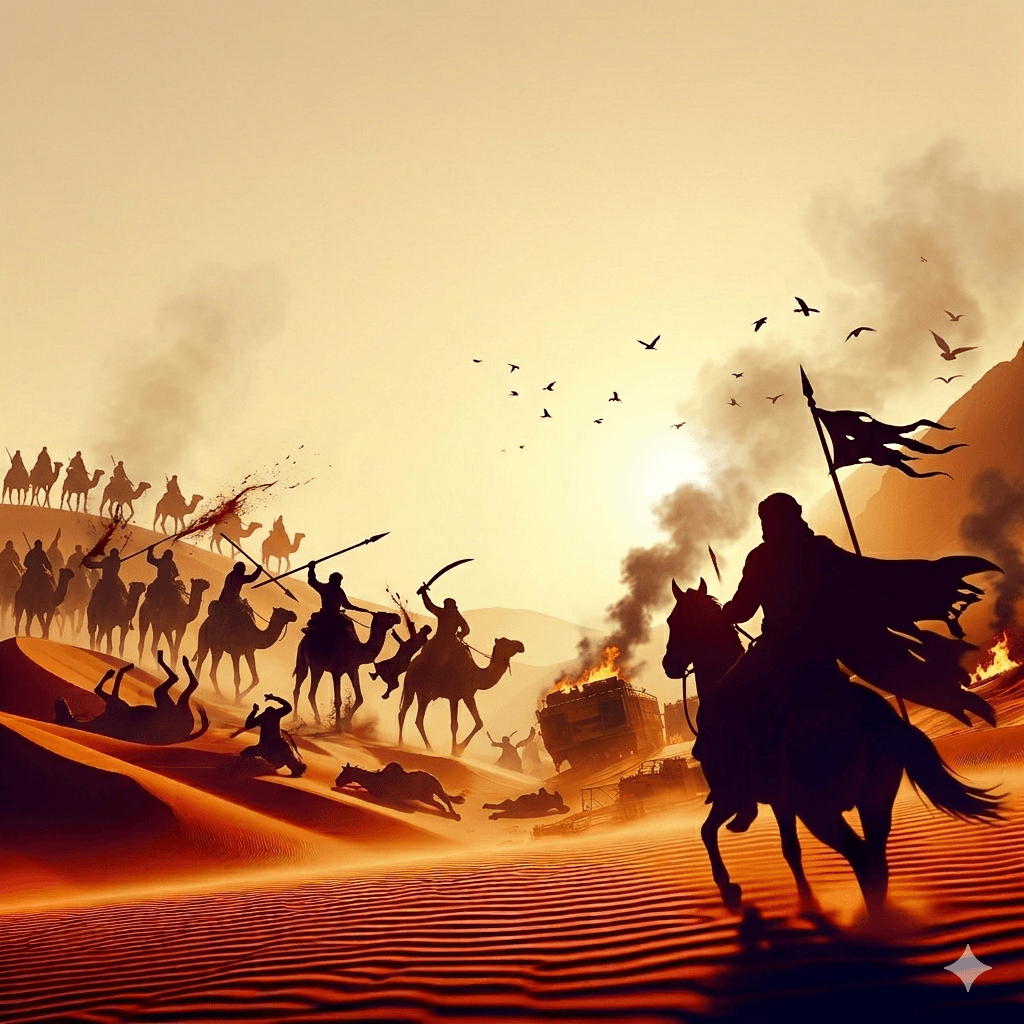
There are more than 100 verses in the Quran that call for violence, but this is the main one. It has been the foundation of violence throughout most of Islamic history:
“Fight those who believe not in Allah nor the Last Day, nor hold that forbidden which hath been forbidden by Allah and His Messenger, nor acknowledge the religion of Truth, (even if they are) of the People of the Book, until they pay the Jizya with willing submission, and feel themselves subdued” (Quran 9:29).
This is almost universally agreed upon to be descriptions of the Jews an Christians. Muslims are commanded to fight them until they
1) Become Muslim by believing
2) Be killed (fight)
3) Pay Jizya – Unbelievers subjugation tax
This was the very last chapter of the Quran (the Quran is not in chronological order). It is Muhammad’s final marching orders given to the people.
Muslims for more the last 1400 years have proudly used this very text for Jihad. It is the bases of almost all the terror groups today. But in modern history, there is a real push for Islam to present itself as peaceful. Therefore, many say that this text is just context to a specific battle, not ongoing commands.
Why 9:29 is not temporary, but an ongoing Call to Violence
1) The Jizya Tax is ongoing
Jizya is the payment unbelievers must pay if they don’t want to convert or die.
If the Jizya tax is for just a specific battle, then we would see it end. Instead, the jizya tax is ongoing. How do we know this? Because when Jesus returns, he will end the Jizya tax.
“Narrated Abu Huraira: Allah’s Messenger (ﷺ) said, “The Hour will not be established until the son of Mary (i.e. Jesus) descends amongst you as a just ruler, he will break the cross, kill the pigs, and abolish the Jizya tax. Money will be in abundance so that nobody will accept it (as charitable gifts)” (Sahih al-Bukhari 2476).
This also puts an end to the claim that Islamic battles are defensive in nature. You can’t force someone to pay the Jizya or die in any defensive way.
2) The text names a category of people, not a specific, individual group
It doesn’t say, “fight off the Romans!” or “fight only during Tabuk.” It defines the enemy – Unbelievers. More specifically, it defines them as Christians and Jews.
You don’t describe a specific enemy this way. But this is a general term for a broad group of people.
3) The trigger is belief, not behavior.
The verse doesn’t say “fight those who attacked you” or “fight those who broke the treaty.” It says fight those who don’t believe in Allah and don’t follow the true religion. That describes billions of people across all of history — not one army in 630 AD.
5. The scholars themselves said it replaced earlier, peaceful verses.
Major classical scholars explicitly said 9:29 cancelled earlier Quranic verses about coexistence. You don’t cancel a peacetime principle with a one-battle exception. You cancel it with something you intend to be permanent.
Babarti, a renowned authoritative scholar of Islam, says this – “He commanded initiating fighting absolutely; in all time periods and places, He said, “and fight them until there be no fitnah(8.39) and ‘fight those who do not believe in Allah and the Last Day’ (9:29) (Al Babarti, Akmal al Din. Inayah sharh Hidayah (in Arabic). Maktaba Shamela. p. 5/441.)
Ibn Kathir, Al-Tabari, Al-Qurturbi supported that this was ongoing and not limited in nature. These are major scholars. They did not apply this teaching to a singular campaign.
6. Classical Islamic Law developed around the verses.
Islamic history shows entire treatises on conducting jihad, how to put people as dhimmis (subjugated and inferior status), systems of jizya for people to pay, etc… If this had been understand as a singular battle, then one of this would have been needed or developed. Classical Islamic books like Reliance of the Traveler discuss how to fight non-believers. For 1400 years this text has been seen as ongoing.
7. Surah 9 is the last chapter, making weightier claims.
In the Quran, the later chapters carry the greater authority. In the Quran, chapter 9 is the very last chapter.
8. Islam has always been expansionary in nature, not defensive nor peaceful.
You cannot expand if you do not go. There has always been historical records that indicated that Islam was spread by the sword. Defense does not expand. Only offense.
9. The hadith support the calls to violence
“It was narrated that Abu Hurairah said: “The Messenger of Allah [SAW] said: ‘I have been commanded to fight the people until they say La ilaha illallah. If they say it, then their blood and wealth are prohibited for me, except for a right that is due, and their reckoning will be with Allah'” (Sunan an-Nasa’i 3977).
“It has been narrated on the authority of Abdullah b. ‘Umar that the Messenger of Allah said: I have been commanded to fight against people till they testify that there is no god but Allah, that Muhammad is the messenger of Allah, and they establish prayer, and pay Zakat and if they do it, their blood and property are guaranteed protection on my behalf except when justified by law, and their affairs rest with Allah” (Sahih Muslim 22).
“Narrated Ibn ‘Umar: Allah’s Messenger (ﷺ) said: “I have been ordered (by Allah) to fight against the people until they testify that none has the right to be worshipped but Allah and that Muhammad is Allah’s Messenger (ﷺ), and offer the prayers perfectly and give the obligatory charity, so if they perform that, then they save their lives and property from me except for Islamic laws and then their reckoning (accounts) will be done by Allah” (Sahih al-Bukhari 25).
“Narrated Abu Huraira: The Verse:–“You (true Muslims) are the best of peoples ever raised up for mankind.” means, the best of peoples for the people, as you bring them with chains on their necks till they embrace Islam” (Sahih al-Bukhari 4557).
For 1400 years, Islam has taken great pride in being violent, expansionist, and “loving death more than others love life.” Jihadis are not extremists, they are fundamentals following their texts. This is why we see most terror groups today are Islamic.
This text is not for specific battle, as some have claimed. Most of Islamic history has interpreted it is a call to arms to take over the world by subjugation or force if necessary.
In the words of the Quran 2:216:
Fighting is prescribed for you, and ye dislike it. But it is possible that ye dislike a thing which is good for you, and that ye love a thing which is bad for you. But Allah knoweth, and ye know not.